Artificial turf can create a defined surface for a yard, play area, or putting green, but a product sample alone cannot tell you whether an installation suits your property. Before requesting an estimate, think through how the space will be used and what questions will help you compare the proposed product, preparation, and finish.
Define the intended use first
Write down who will use the area and what they will do there. A pet zone, children’s play space, decorative lawn, and putting green have different priorities. For example, you may care most about a clear walking route, a comfortable place to sit, a particular surface feel, or how the turf transitions to an existing patio. State your priorities rather than assuming one product is ideal for every use.
Notice how the area receives sun and shade during the day. Ask how the proposed surface may feel under those conditions and whether a sample can be viewed outdoors. Research by the U.S. Geological Survey compared satellite-estimated land-surface temperatures at sports fields and found higher temperatures at the synthetic fields studied. That research is not a temperature prediction for every residential turf product, so treat sun exposure and comfort as property-specific questions.
Ask what happens below and around the turf
Request a clear explanation of base preparation, grading, and drainage planning. Ask where water is intended to go, how the installer will assess existing flow, and what site conditions could affect the plan. These questions do not replace a site review, but they help you understand what is included and what assumptions the estimate makes.
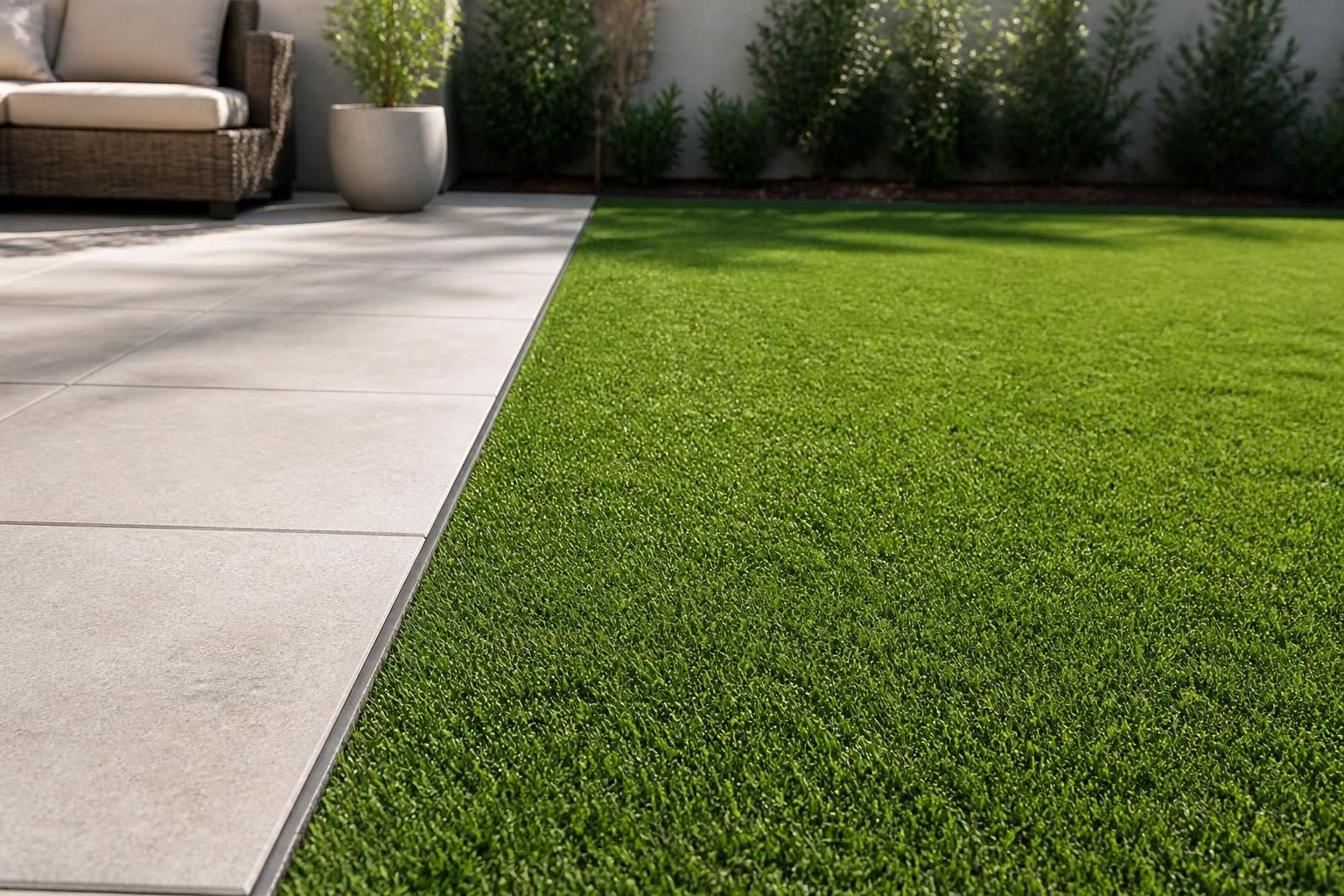
Look closely at edges and transitions. Where will turf meet a patio, planting bed, gate, concrete path, or putting surface? Ask how seams and perimeter edges will be placed, what details will keep the layout visually tidy, and how access for future maintenance will be handled. A simple sketch marked with doors, gates, and walking routes can make this conversation more concrete.
Review samples, care, and written scope
Ask to see product samples and compare them in the location where they will be installed. Discuss appearance, texture, pile characteristics, and any product-specific care instructions. Artificial turf still needs maintenance, and drainage planning still matters. Ask what routine cleaning is recommended for your intended use and which tasks are yours after installation.
Before approving a proposal, look for a written scope that identifies the product, site preparation, base work, drainage approach, seams, edges, transitions, cleanup, and exclusions. Ask what product warranty and workmanship warranty, if any, apply; request the documents and clarify who handles a claim. Avoid relying on a verbal summary when the written terms can answer the question.
Pre-estimate checklist
- Describe the primary use: pets, play, appearance, practice, or a mix.
- Note sunny and shaded periods, existing surfaces, access gates, and routes.
- Bring photos, rough measurements, and a sketch of edges and transitions.
- Ask how the base, grading, and drainage will be evaluated and described.
- Compare samples outdoors and ask about care for your particular use.
- Request an itemized scope and written warranty terms for review.
Bring your questions to the estimate
Scenic Green Landscaping offers artificial turf and putting green services. A consultation is a chance to discuss the property, intended use, and options without assuming every yard needs the same solution. Share your project details to start that conversation.